tattoos
Showing posts with label vinyl records. Show all posts

Saturday, November 19, 2011

From Records To Night Spots: Irene Yap Part II

When Irene Yap decided to turn professional, a singing contract during her school holiday in 1971 took her to Genting Highlands, Malaysia, where she performed and was accompanied on stage by The Commandos from Indonesia.
This new life lasted for 15 years and included stage appearances with Rahim Hamid (Singapore's Nat King Cole) and The Pebbles, Sonny Bala and The Moonglows and many other top pop Singapore bands.

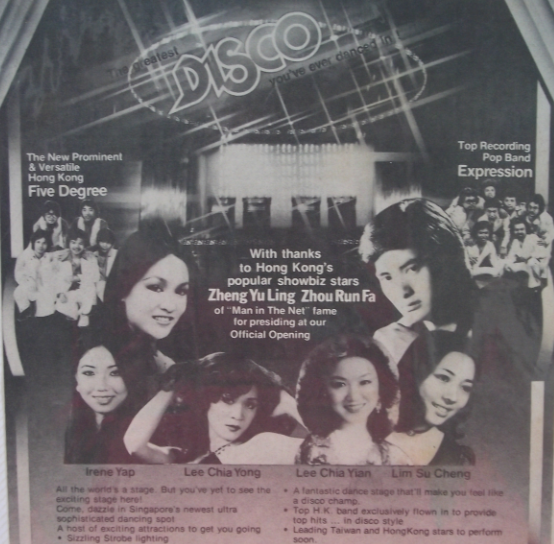
She entertained at a string of hotels all over Singapore from about 1972 to 1980 including the Apollo at Ion Bar in Kings at and the Ambassador in the East Coast. Her nightclub stints included the El Amigo, Lido Deluxe (image 2), the Capuccino at Plaza Singapura and other popular spots.

A journalist from an English newspaper, remarked in an article that Irene "has a voice that is light, almost ethereal." With a voice so heavenly like the songbird herself, it was not a wonder that she had encore performances at the clubs that she was in. Irene remembers that in a particular nightspot "management kept asking me to come back..." She did, and remained a resident singer for almost five years. And that told a lot about her!

There were moments in her youthful career that Irene sung duet with guitarist and keyboardist Edmund Tan. They entertained audiences with hits like , Jackson, Love Me With All Your Heart, He'll Have To Go. Her nightly club acts widened her repertoire and she sang in other languages too.

Irene added, "The regulations in the nightspots were very strict. Being underaged I had to apply for a licence to perform. We were not allowed to patronise customers and had to wear decent costumes."

But it was a varied, colourful and successful life's journey for this songbird. From the first vinyl record contract offered, where the Charles Lazaroo Orchestra accompanied her in Pretty Ribbons and where she went through "hard gruelling sessions of recordings", up to the time that she retired to get married, she never regretted a moment.

Irene moved to the US for a short while, living in two major cities. She had been a housewife since except for a comeback at two nightclubs in 1995. During her very early years one newspaper headlined her as the "pint-sized veteran of show business".

Today this true veteran reminisced, "When you start singing at such a tender age, you never think about anything else. Singing becomes your life and doing something you love. No regrets except that it had taken some of my childhood."

Irene's story reveals her positive attitude towards a life and career that she chose to take. It is a music journey spanning quite some years but she has made it a successful one. Thank you Irene for sharing your past moments with me. I appreciate it very much.

Images from Irene Yap Collection: 1) Night club poster. 2) Chinese New Year songs with two other singers. The three of them did a Chinese Variety Show appearance and also recorded children's songs.

Original article: Andy Lim. All copyrights reserved.

Wednesday, November 16, 2011

Irene Singing At 11 And 10 Albums By 14: Part 1

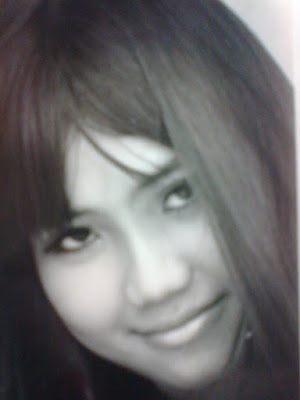
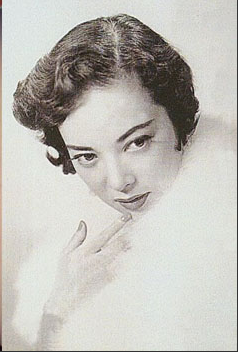
In 1966 when Irene Yap (image: 1,2) was only 11 years young she was asked by a Mr Heng to sing with a Singapore guitar group called The Sandboys while watching them during a rehearsal. According to Irene, the gentleman was affiliated to White Cloud Records (more popular with the production of Chinese pops) and signed her up for a recording contract after listening to her voice.

Irene made her first vinyl singing the very popular Pretty Ribbon by Engelbert Humperdinck. But her version was different because she sung it in both English and Chinese. It was a hit and sold about 8,000 copies! She carried on with White Cloud and in the next four years, up to the time she was 14 in 1970, Irene had released seven EPs and three LPs.

Irene recalled that before the singers had final recording sessions they had to be properly trained. She continued, "So when I was only eleven Mr Heng sent me for vocal training by Liang Pin a famous Hong Kong singer then. Besides singing scales I had to do the Por por mor fer, a Chinese pronunciation course."

As her popularity peaked, Irene was well publicised by the local English papers. Stories about this youthful singer, her recordings and pictures appeared in The Straits Times, New Nation, Singapore Herald, Eastern Sun and other vernacular newspapers. Within the short span she had appeared on the little home screen during Chinese Variety Show produced by RTS (Radio Television Singapore) and other programmes like Take Four, The Guthrie Hour and on the Malay Variety channel.

With such a success story and because she wanted to pursue her love for singing Irene made a decision to turn professional and it was during her school holiday in 1971 when Irene decided to...

(More about Irene in the next posting and what the newspapers say about her and the special licence she had to obtain to perform because of her age.)

Do you remember Irene and her White Cloud recordings? Tell us.

Images: Irene Yap Collection. Copyrights Reserved.

Article: by Andy Lim as told by Irene Yap.

Saturday, November 12, 2011

Mel n Joe Ferdinands: My, How They've Grown!

Mel agreed to meet Andy for a personal interview but everytime they fixed a date, one of them got too busy. They had postponed it a few times but since Mel and his brother Joe would be launching their book soon, all decided that blog readers should be given a peek of the book instead. It's not out for sale yet but here's a morsel from the blurb:

"Stalwarts of the local music scene, Mel & Joe have played, sung and done it all. Household names since they first appeared on television in 1971, Mel & Joe are not only two of Singapore’s best-loved musical talents; they are living proof of our rich musical past and vibrant present.

From the early days of Talentime and the black-and-white broadcasts of RTS (Radio Television Singapore) to their glorious heyday with one of Singapore's top bands, Gypsy, they continue to rock on with passion.

Throughout their musical journey, family support – parents, siblings, wives and daughters – has been instrumental in giving them the love and inspiration that was needed to strive to continue to be the best they can be musically.

Music brings the brothers even closer, and at the same time, continues to forge a strong spirit of camaraderie that they share with their audiences.”

Do you have comments to make about Mel and Joe? Tell us...

Article from book: I Play And Sing. Copyrights reserved.

Image 1, 2: Mel n Joe Ferdinands Collection.


Friday, October 28, 2011

Change This Blog To An Internet Shopping Centre?

Maybe I should convert this blog into an internet shop like e-Bay or Amazon.com and start selling the products that I write about. Won't it be a great idea? Imagine the amount of money I can make with just a 10% cut. These letters below are just a few of the mail I have received where surfers and friends have requested to buy CDs, vinyls (records) and books. Here are some of the letters:

1) Just spent 60 Euros on a boring research book recently. This one sounds interesting. Any chance you could fly me a copy Andy? Will do an internet transfer from UOB. :)

2) I am Santhosh from India. I would be extremely grateful to you if you could help me get the MP3 of the following songs of Ervinna. I had a cassette which had 22 English songs of Ervinna, which got destroyed. I have managed to find 13 out of that 22 - but could not get the following 9 songs. I am ready to pay.

3) This musta be the Dinoref that you have mentioned to me... gonna have to see if I can gets my hands on one of Michael Goh's albums of Dinodevotion...

4) Wow, the book by Yusnor Ef is a major discovery for me. I have many songs from that era, now I need that book to accompany them. Please provide some info on where to buy it. Many thanks!

5) "Mary Ho Any chance you have a Red Fender Stratocaster in your collection? ; ) Also, you mind sending me an autograph version of your CD? I will do a $fund$ transfer from here if you don't mind.

6) Do you know of any other copies of the EP (The Diamond Four) that are in existence?

7) Mary Ho commented on a post you were tagged in."I don't have a red one at the moment but would love to own one if I can find it.:) I'm in London now, saw one at Harrod's yesterday but it's a three quarter size... I didn't buy it. Glad you mentioned my CD, will autograph it and send you a complimentary copy. Please let me know where I can send it to.:)"

No I'd rather leave it as a blog and make my usual comments about Singapore 60s music. So please keep on writing because this coming November the blog will be 3 years old. And I am not trying to promote it. Just having fun. And I probably won't earn 2 cents from it.

What do you readers think?

Images: from Google.

Original article: Andy Lim.

Wednesday, September 7, 2011

Shao Fong Fong Sings In Impeccable English


(Josephine Shao, Siew, Xiao, Siao, Fong Fong, Fung Fung, Fang Fang. Same name but spelt differently.)

I had often seen 60s Hong Kong movies which starred Siew Fong Fong and it didn't matter then whether I understood the language or dialect that the script was in. She was a joy to watch and what attracted me then was her pretty face and her ability to entertain her audience with her Jane Bond kiss-bang, wuxia chops, sword wielding choreography and hippy-hippy-shake dancing.

Examples were movies like, SwordsOf Swords, I Love A-Go-Go, The Lady Killer and many more. She was one Chinese actress that most fans in the 60s would remember. On the silver screen Josephine Siao was a major star in both Mandarin and Cantonese movies. In that decade alone she had acted in more than 200 movies and those days the Hong Kong film studios churned out films like factories produced chopsticks. Personally she felt manipulated, like a "puppet."

Delving into her life and history, I found that she was born in Shanghai in 1947 with a career spanning some five decades, from her beginnings as a child star up till the highly respected professional that she is today. She was the most popular princess in the group of actresses termed the 'Seven Cantonese Princesses' and became one of the biggest teen idols in Hong Kong along with frequent co-star Connie Chan Po Chu.

Unlike many child stars, Siao made a successful transition to adult stardom, winning so many awards and remaining one of Hong Kong's most prolific and popular actresses today. Having largely missed out on a formal education because of her acting career as a child, Siao pursued her studies in later years despite the handicap of increasing deafness and the demands of raising a family. She holds an MA in Child Psychology and is also a published author.

Digging into my drawers lately, I managed to find some western pops by Shao Fong Fong on EMI vinyls (images). And the recordings were proof enough of the fluidity and ease with which she used the English language. The lyrics were beautifully enunciated and her gentle, soft but clear voice was sufficiently suitable for the covers she was interpreting as she delivered them with grace and dignity. These few western covers she did were a contrast to many of the Cantonese and Mandarin songs she sung on screen and those recorded on other vinyl labels.

Her diction and phrasing reminded me of Malaysian teacher and pop singer Frankie Cheah's English language recordings on EMI. (Click 'Frankie Cheah on 'Label' below to read posting.)

Vinyl Notes: EMI ECHK 527 (1969). Bluer Than Blue, Who Will Buy this Wonderful Morning, Running Free, Goodbye. EMI ECHK 523 (1968). L.O.V.E, Love, Ding Dong Song, Kiss Me Goodbye.Images/Original article: Andy Lim Collection. Information from Websites.

*Notes from a Website about the actress:

Josephine lost all the hearing in her right ear at age two and has become nearly deaf in her left ear since 1990 so decided to retire for good. Fredric Dannen relates the following about his meeting with Josephine Siao - who he noted has impeccable English.

"At her request, we met in the conference room of a hotel, because, she explained, 'my gadgets do not work so well in noisy places.' Siao did not seem to miss a word I said, and I thought perhaps she had exaggerated her condition, until Ann Hui (the director of Summer Snow) later told me that Siao often has to lie down after a conversation, because the strain of using her aid left her exhausted.I was all the more amazed at Siao's acting skill - her deafness is indiscernible in her movies - and all the more grateful for her interview."
From: http://hkmdb.com/db/people/bio.mhtml?id=2222&display_set=eng

Friday, August 5, 2011

1957 - Li Xiang Lan In 'The Lonely Boudoir': Part I

SONGS I LOVE:

A few years ago, my trip to one of the many 'antique' shops in Singapore proved fruitful when I managed to buy a *10-inch Pathe Long Play vinyl of 10 songs that I had been searching for some time. Li Xiang Lan (or Lee Hsiang Lan in Wade-Giles) who probably recorded it in 1957, was one of my mother's favourite female singers. Although she loved pop westerns and Indonesian keroncongs we listened to Mandarin songs too.

The album, Lan Gui Ji Ji - CPA 134 - (above), literally meant, Orchid Chamber, Quiet, Quiet. The back sleeve is both in Chinese and English and subtitled, My Lonely Boudoir. The promotional material went: "Soprano Lee Hsiang Lan is well known to all music fans. Ten years ago she made many hits with the recordings of Mandarin songs such as Song Of The Sweet Seller and We Met Too Late. She has very clear diction and an entrancing voice. Indeed one of our most outstanding artises!"

The songs that were recorded reflected the mood of the album cover. Side One: My Lonely Boudoir, The Crow And The Phoenix, A Wandering Life, The Moon Over The River and Song Of The Heart (cover for the Western hit, Eternally). SideTwo: Young Days, Three Years, Ten Square Miles, We Met Too Late and Only You (not The Platters version).

Li Xiang Lan is one of the seven Shanghai greats. Another diva Zhou Xuan, appropriately dubbed the lady with the 'Golden Voice', is a personal favourite too. Just for the record, the other 5 divas are Bai Guang (White Light), Bai Hong (White Rainbow), Gong Qiuxia, Wu Yingyin (Queen of the Nasal Voice) and Yao Li (Silver Voice).

Li Xiang Lan, who tipped the scale as one of the most versatile entertainers born this side of the Pacific, is also a popular film star and had acted in both Chinese and Hollywood movies. One of her hits on the big screen was House of Bamboo. This coloratura soprano (lyric soprano of a high range) had a career in Japan, Hong Kong, Korea and the U.S. But do you know her real name and nationality?

More about her in the next posting.

*78 rpm versions should be available too. Any comment?

Images: Google images and Andy Lim Collection.

Information: Li Xiang Lan from Wikipedia. Others from record sleeve.

Saturday, July 30, 2011

1975 - SuZanna Teo And Curtsie: 'Loving You'

In April 1975 a young lady from the U.S., with a five-and-half-octave vocal range, composed and recorded a song, Loving You (not the Elvis Presley version) with much success. The singer was able to enunciate in the high registers to set her apart from other whistle-register singers. Unique *Minnie Julia Riperton became a star when Loving You sold a million copies and opened her to the pop music world.

Eight months later in December, a young lady from Singapore sang the same hit and won the 1975 Discovery #Talentime at the Shangrila Hotel in Orange Grove Road. Her main prize was a recording contract with EMI where she recorded the Riperton number with 11 other covers on an LP titled, SuZanna Teo Loving You (EMGS 5003).

Nineteen year old Suzanna, who was a Pre-University student at Victoria Secondary School, owed her singing success to Curtsie, the guitar she strummed and hugged during the competition. In her last year as a teen, Suzanna explained that music was her life for the moment and something which she could do "wholeheartedly." When asked about her future plans during her interview with The Straits Times, she added that she wanted to be a social scientist.

In addition to her grand prize, she won a trip to Hong Kong and an appearance at the **Frances Yip TV Show. Suzanne also bagged a pewter tropy, a $200 record voucher, a cassette player and other useful gifts. According to the Straits Times report, an RTS (Radio TV Singapura) announcer Adaline Scheerder was the runner-up and Samuel Owen, a veteran vocalist, won the third prize. The judges were a distinguished line-up of personalities then and included, George Favacho from RTS, Daisy Devan and Keith Bruce from EMI and Lawrence Magnan from Shangrila Hotel.

This interesting LP was the only one recorded by Suzanna. It was produced, arranged and conducted by Reggie Verghese (Quests' Lead Guitarist). The recording/mixing engineer was Vincent Lim. The sleeve design was by THE BEAUTIFUL PEOPLE with photography by Bernard Chan.

Side One: Follow Me, Rock and Roll Coaster, This Time I'd Be Sweeter, Danny's Song, When The Party's Over (Riperton), April Fool. Side Two: Loving You, Never Can Say Goodbye, Please Tell Him That I Said Hello, Tomorrow, You're No Good, Special To Me.

Like our own Olivia Ong today, Suzanna Teo was a hit in the mid70s. According to Audie Ng, music impresario, he contracted her to sing at the Imperial Hotel Singapore in the early 80s when she was at the top of the hit parade. Have you heard Teo singing or listened to her recording before? Tell us.

*Wikipedia: Singer/Songwriter Riperton died of cancer in July 1979.
**Pop lady singer of the 70s who hails from Hong Kong.

#Many young hopefuls those days participated in singing competitions which might help them secure a recording contract and some fame. Fortune is something else. Click 'Talentime' label below for similar themes.
Information from: The Straits Times Press, Singapore 5/12/1975, Pg 10.

Images: EMI Records Singapore/Andy Lim Collection.

Thursday, June 23, 2011

Singapore 60s Vinyl Covers Are Works Of Art: Pt 1

The 3 vinyl cover images above are taken from my record collection of Singapore, Malaysia and SE Asian 60s and 70s pop music stars and they fill my drawers to the brim. What amazes me is the illustrative work done by some of our graphic designers who had taken time and trouble to draw these pieces of art.

The images shown are only samplings of the hundreds of local record covers that have hand-drawn portraits. Frankie Cheah, The Quests and Sugiman Jahuri are some of the musicians who have credibility in the 60s to attract record buyers with their own rendition of imported western music.

The first vinyl cover shows Johore (Malaysia) teacher Cheah's hit single Woman In My Life (image 1: S-CHK 1074), with Denver on the flip. Produced and marketed by EMI/Columbia, the music was arranged and produced by Reggie Verghese/Kassim Masdor.

The photography and illustrations were by Freddy Ang. The white bold lettering with light green background announces the stylishly drawn image of the singer and guitar who appear in black and white.

As hippie music invaded SE Asia, a new release in March 1968 by EMI had The Quests instrumentalizing 4 Asian songs (image 2: ECHK 587) with new psychedelic sounds*. The cover shows the usual flower-power design significant during that period of pop music.

Psychedelia was rearing its head, and as the EP sleeve shows, only the ladies in Singapore could have long hair, not the guys. This time 4 colours were used, a dull greyish blue and black contrasting the yellow flowers and white faces. The illustrator of this intricately designed cover was not named. Pity. The songs in the Quests EP are The Indian Maid, Return Of Spring, Sayonara and Why Go To The Temple.

In 1968 when the man from Bukom Island (Singapore) took second prize in the Radio Television Singapore Talentime, he recorded four sentimental songs. Sugiman Jahuri became an overnight sensation and a sketch of the man appears on the cover of EMI record (image 3: ECHK 593).

The detailed yet simply crafted portrait of Sugiman with his suede-coloured spring jacket, purple batik top, white pants and loose belt echo his easy going singing style and fashion of the day. Again the original illustrator is unknown but the design and photography was by Unigraphic Studios. Songs on EP: Look At You, It's Not For Me To Say, You Make My Life Worthwhile, Born Free.

So, even before the advent of Lucas Films and Walt Disney Films in Singapore today, we had our stable of talented illustrators who have done justice with their creativity.

Images from iPhone4: EMI Records (SE Asia Limited).

Original article/record collection: Andy Lim.

*Thanks to Jap Chong, well-known music personality and Quests rhythm guitarist, who personally explained to me the use of the fuzz-box on this recording.

Sunday, February 6, 2011

Looking Back: Country Music With Maxine Brown

THIS POSTING IS NOT AN ADVERTISEMENT
If you are not familiar with the music of the 50s and 60s Maxine Brown's Looking Back To See - A Country Music Memoir - is the book to grab from the shelves of our National Library. The Three Bells (1959) is one of the biggest hits of all time and gave Maxine Brown, her sister and brother international stardom. And the story begins...
Mini review:
Maxine Brown shared stages with everyone, from unknowns to the knowns like Rick Nelson and Elvis Presley. "She saw Elvis at the beginning of his incredible, tragic ride" when she devoted one full chapter to travels with the King.

Then there were Jim Reeves and Johnny Cash and pieces of advice - "Lousy bands can mess up the greatest singers..." - from the people she met during the times of boogie-woogie, swing music, television, horror movies, The Kennedys, space flight, hula hoops and "nickel Cokes."

Country Music People magazine says it all, "This is the story of The Browns... It is also the story of rip-offs, frustration money woes, and the harsh truths about fame... Told in a spunky, no-holds-barred, immensely readable style with plenty of juicy anecdotes (blurb)."

If you have the time and interested in country music, this is the book to check out. And who are the Browns, in case you are not familiar with them? Her book tells all.

Image: Cover of "Looking Back To See - A Country Music Memoir" by Maxine Brown, The University of Arkansas Press (2005), USA. From: National Library Board, Singapore. NLB: 782.421642

Original article: Andy Lim.

Thursday, February 3, 2011

The Trailers: Phoenix Theme: Seeing Double


Seeing Double: Play the song on the right bar while you read >>>>>>>
For those readers who are familiar with Singapore pop music from the sixties, seeing two different covers of the same vinyl is not surprising. For those who aren't, here are two Chinese New Year red packets. This particular vinyl sold so well that they produced another lot but with a slightly different cover. Not a bootleg copy, definitely.
44 Years Ago:
It was released exactly 44 years ago - in February 1967. The new Trailer for this recording was Jimmy Chan, featured as the man on the keyboard. Chan was with the Flamingos Combo (remember them?) and replaced Michael Teo.
Victor Woo:
That's the story I have at the moment until Victor Woo comes back from his trip to tell me the real story, so for those interested the record from Cosdel contains: Phoenix Theme - Go Go Beat (EMI HongKong), Lara's Theme (Jarre/Albert), Ding Dong Song - Off Beat (Yao Ming n Bart, Peter Maurice) and Ali San - Off Beat (Formosan folk song, unknown).
Line-up:
The back cover includes the Trailers line up for the vinyl: Victor Woo on lead, Edmund on rhythm, Eric Tan on bass, Jimmy Chan on the electric organ and piano, Tony Zee on drums and special guest, Robet Song on percussion instruments. In case you are interested, record number is: CEP 3001. You hear the songs everywhere in Singapore and the rest of South East Asia after this vinyl was released.
Images: Andy Lim Collection.

The Quests 'Return Of Spring' by MrRainbow64

Monday, January 31, 2011

Shades Of Kung Fu Chinatown Rock: Chinese New Year 1979: The X'periment! Living In The Past?


Ang Pow:
Well, here it is, my own copy of Chinatown Rock (images:3,4) by X'periment. It's my ang-pow (red-packet) or Chinese New Year gift for everyone. I googled for the covers but couldn't find the images. I guess this record is going into extinction, so if you have a copy, keep it. The songs are gem-stones today.

Mervyn Nonis:
It is a Singapore WEA (Warner/Elektra/Atlantic) record pressed in 1979. Eight of the songs are originals by Mervyn Nonis and the Xperiment. It is produced and engineered by Stephen Israel and Lim Gek San.

K.V. John:
Personal Manager is K.V. John, who was a great compere in the 60s and 70s with his Spot Dances and Musical Chairs. John was also a comic on stage with a very pleasant personality. Does anyone know where he is now?

Original Songs:
So for those interested, Side One has: Chinatown Rock, Here Comes That Feeling, Come And Rest On Love, Living In The Past and *Fun, Fun, Fun. Side Two carries: Different Sound, Waiting, *Hedonism Is Fun, Geraldine and Baila. (Except for the two with astericks, the rest are originals.) Some songs are on You Tube provided by MrRainbow64. THANKS VERY MUCH, SIR.

Interviews:
I am waiting to interview Mervyn Nonis. Called him some months ago but couldn't make it to meet him. If you have any idea where the other members of X'periment are please let me know. I'd be glad to make an appointment to chat and write about them. Better still, if you can, do a write-up on the Comment page. Thanks.

Greetings:
HAPPY CHINESE NEW YEAR OF THE RABBIT EVERYONE. DON'T FORGET TO VISIT CHINATOWN! IT ROCKS!

Cover Images/Original article: Andy Lim.
B/W Image 1: http://www.chinatownology.com/
Image 2: http://www.blogtoexpress.blogspot.com/

Sunday, January 30, 2011

Lokananta Studio: Indonesia's Abbey Road: 4th Asian Games Souvenir Vinyls Feature Moluccas Songs


(Images: a 10-inch LP, one in a series of 4 distributed during the 4th Asian Games in Djakarta in 1962.)

While I was posting the last few articles about Jimmy Linchong and a song from the Moluccas, I remember my few pieces of 10-inch Long Play records that I have, pressed by the famous Lokananta (literal: heavenly gamelan without drums) label. They are precious and not easily available in the market. And as I rummaged again feverishly through my cupboard I found four. One of them (image 2) contains the song Ajo Mama (j is pronounced yerh in Indonesian).

According to a website (internet address below), the Lokananta studio (image 1,2) in Indonesia is as famous as the one in Abbey Road, Westminster, London. It is the first Indonesian music label, founded in Solo, Central Java. Since its inception, Lokananta has been producing and duplicating records and audio cassette tapes.

When it started in 1958, the records were marketed through the RRI (Republic Rayat Indonesia). As the label reached its state enterprise status, the company activities included: administering, recording, broadcasting, printing and publishing.

Lokananta has thousands of songs from all over Indonesia in its treasure trove and its vast collection encompasses folk, ethnic, world and pop music. So there is keroncong, Javanese gamelan, Balinese, Sundanese, Batak (North Sumatra) and other regional music.

This vast music collection includes many recordings of famous singers from Indonesia. Master tracks in the studio contain songs from legendary composers and singers like Gesang, Waljinah, Titiek Puspa, Bing Slamet, and Sam Saimun. Lokananta has more than 5,000 such track recordings of local songs. Besides songs, state speeches of the late President Sukarno are kept.

Aside: Controversies abound regarding the well-known song Rasasayange. According to the same web-site, this song, together with other Indonesian folk songs, can be found on a single master-track in the Lokananta studios. It is claimed by a certain country as its original folk song but is actually an original from the Moluccas.

Record Detail:
Part One - Tracks on Side One: Dari Barat Sampai Ke Timur, Ba Bendi-bendi, Seringgit Dua Kupang, Ajo Mama, Side Two: Potong Bebek Angsa, Sarinande, Lenggang-Lengang Kangkung, Kaparinjo. Orkes Lokanada, pimpinan B. Y. Supardi.

The original and detailed version can be found in the website below:
http://www.reviewing-blogs.blogspot.com/2010/05/lokananta-indonesian-abbey-road.html
Record Cover image: Andy Lim Collection.
(Because of copyright, I have deleted the two photographs showing the recording studios and replaced them with the image of my own personal copy of the album I discussed. You can see the studio images on JGP 4838 Flickr.)


Friday, January 28, 2011

This Linchong EP Needs Interpretation: Anyone?


The only EP (Blue Star NE 1014) that I possess of Jimmy Linchong because it was offered to me at a discount and because I remember watching him on television and admired his looks.
The National Museum screened his movie, The Singing Thief in June, 2009 where he acted with Lily Ho (sexy, screen siren of the sixties). But the above song selection is not from the movie.
If Chun See or anyone else can help to translate the cover title and 6 song titles into English, I'd be grateful.
Image: Andy Lim Collection.

Wednesday, January 26, 2011

Lam Chun See Remembers Teresa And Jimmy

THANK YOU CHUN SEE: Read his comments under Jimmy Linchong's posting. Ayo Mama or Ai Qing Nali Lai is by Teresa Teng. She learnt this song together with Rasa Sayang when she stayed in Indonesia. Rasa Sayang and Ayo Mama originated from the Maluku Islands (Spice Islands) of Indonesia.

Doesn't matter if you can't read Chinese. Enjoy song on the Right Bar >>>>>

印度尼西亚民歌

小河弯弯 流水不断来
河里的水草
跟着漂过来
流水长在 长流那天外
问一声河里水草哪里来

哎哟 妈妈
莫非也像我的恋爱
哎哟 妈妈
可是来的这样奇怪
哎哟 妈妈
怎么你不讲个明白
谁知道我的爱情哪里来

小河弯弯 春风吹过来
河边的花香
跟着飘过来
遍地花开 芬芳到心怀
问一声春天从哪里来

哎哟 妈妈
你可不能不理不睬
哎哟 妈妈
我的寂寞情意难挨
哎哟 妈妈
给我怎么样的安排
你可叫我怎样的安排
谁知道我的爱情哪里来

Ayo Mama: Indonesian lyrics (literal translation):

Ayam hitam telurnya putih (Black chicken too has white eggs)
Mencari makan di pinggir kali (Searching for food by the lakeside)
Sinyo hitam giginya putih (Dark-skinned bride has white teeth)
Kalau ketawa manis sekali. (When she smiles, she's so sweet)

Ayo mama, jangan mama marah beta (Oh mum, don't you scold me)
Dia cuma cuma pegang beta (He's just holding her playfully)
Ayo mama, jangan mama marah beta (Oh mum, don't you scold me)
Lah orang muda punya biasa. (It's natural with the young)
Anyone willing to help with the Mandarin translation? Doesn't matter anyway. It's the beat that matters. Cha-cha-cha!!!

Monday, January 24, 2011

The Stylers Celebrate Chinese New Year In Style

There's a truly fabulous website on The Stylers and I am sure my namesake Andy who created it will not mind if I connect this particular posting to the site. It's a Stylers bunny year. Thanks again Andy and Randy. Without these two gentlemen we would have lost a treasure trove of Stylers goodies.

Sunday, January 23, 2011

Jimmy Linchong: Had Looks Only Elvis Could Match

He was handsome and had looks that only Elvis Presley could match. In fact some fans said he looked like The King. It was a matter of opinion but he could hold an audience in the 1960s, both on stage and on the screen.

Originally known as Lin Hsi-hsien, Jimmy Lin Chong was born in 1934 to a Taiwanese politician with a Japanese wife in Tainan, Taiwan. He graduated from the Tamkang Junior College of English (now Tamkang University).

His started his career in 1955 as a film actor and when he completed his military stint in 1957 he was invited to play in Taiwanese and Mandarin films. In 1962, Lin studied in Japan and when Hong Kong had become a dreamland for those interested in films.

A leading Japanese film company signed a contract with Lin, enabling him to play in Hong Kong-Japan co-productions like: A Star Of Hong Kong and Tokyo, Hong Kong, Hawaii. Lin’s popularity was extended to Hong Kong in 1968 when he became a hit with his avant-garde costumes and performance. He was just as popular in Singapore with a generous fan base. I remember watching him on TV and enjoying the moment.

It was obvious that the Shaw Studios recognised his talent and popularity. He became an actor with Shaw Brothers and played a leading role in a musical called, The Singing Thief. It was directed and written by the well accepted Chang Cheh. The musical drew crowds and Lin contined with two more films, The Singing Escort and Tropicana Interlude.
Do you know anything more about Jimmy Linchong?

Sunday, January 16, 2011

P. Ramlee's 'Bujang Lapok' On A Chinese Record Unique Indeed: Bau Asem, Ketiak Siapa Busok?


Chinese Pop Instrumental: A-Go-Go And Off-Beat Cha-Cha Art Sea Record: MEP 3032.

There were hundreds of instrumental groups in the 60s that catered to the Chinese pop markets in Singapore, Malaya and Hong Kong. Some of them had been featured many times on this blog.

These bands included Maurice Patton and The Melodians, Charlie and The Boys, The Travellers, The Silver Stones, the popular Stylers and more. The songs were usually covers of Western pops.

Tian Lian Band:

The genre of music was familiar too since these bands recorded 60s tunes mainly for dancing. But the name TIAN LIAN BAND (images) was a surprise - a very Chinese group indeed! Never heard or seen a record by this band. After checking some websites I found that this particular band had recorded other songs on Art Sea Record.

P. Ramlee:

But what is more surprising is the song on side two. Unless you are familiar with Malay pops, Pok Pok Bujang Lapok is a tongue-in-cheek about bachelors. It is composed by P. Ramlee and used in his movie with the same title. The other three songs include, When Will You Return (tagged as 'a Chinese song'), Young Ones (a Cantonese song) and So Lonely (a Hokkien song). A gimmick perhaps?

Swinging Skippers:

Even the group name of the dancing girls in the photographs caught my eye. They are called, The Swingin' Skippers. The girls must have been popular then to have their names displayed on the cover. Don't you find their costumes so informal and simple? That's Singapore street wear in the 60s. Not much different from today? And off-beat cha-cha definitely symbolises Chinese pops.

Bolshoi Ballet Orchestra:

P. Ramlee's music is internationally acclaimed that it has even been played by The Bolshoi Ballet Orchestra of Tashkent.

Images/Original article: Andy Lim Collection.


blogger templates | Blogger