tattoos
Showing posts with label Auction. Show all posts

Monday, November 28, 2011

18 December MNS Auction 150

For everyone who has been asking when the next Malaysia Numismatic Society Auction (MNS) at Muzium Negara will be held, it will be held on 18 December 2011. It will be MNS Auction Number 150 and the last auction for this year.  The Auction normally will be held at Jabatan Muzium Malaysia, Muzium Negara, Jalan Petalawati, 50480 Kuala Lumpur. There is a small hall in there where this auction normally held by MNS. The auction normally start at 10.00am and viewing of the lots will start at 9.30am on the same day. As always, I advise you to come early around 8.30am since they're bourse table open for public to buy coins and banknotes.

MNS Auction 150

There will be Bourse Tables available at RM 50.00 per table.Members interested,please book your tables with payments to Mr Tan Tai Seng (03-79835011) at least one week before the auction.

This auction only for members of MNS only. You can read about their membership in here: Malaysia Numismatic Society membership. Entrance fee for ordinary member is RM20.00 and RM40.00 for annual subscription fee. Their coin auction is for member only. Any numismatist over 12 years but below the age of 18 and resident in Malaysia may apply to be a Junior Member. The Entrance Fee for Junior Members is RM5.00 and Annual Subscription is RM15.00. Kindly download the Application Form and send it to the Society either via post, fax or e-mail for approval.

I am not a MNS member and don't asked me why I don't became a member. For info, news and pictures of the MNS auction, you can go to Dickson Niew blog; Niewmismatic error coin. He is a MNS committee member and he normally post about the item that will be on auction. The last time I go at their auction, MNS Auction 149, not so many members join their auction. You might get something valuable for less price.

Sunday, September 25, 2011

Malaysia Numismatic Society auction 149

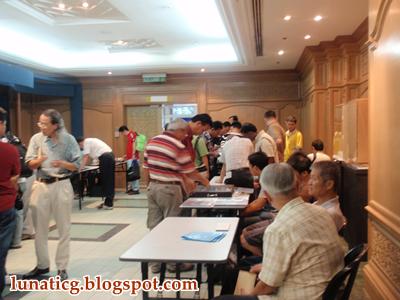
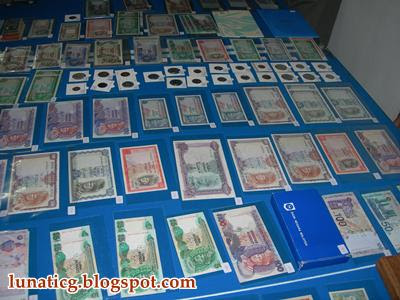
Yesterday, Malaysia Numismatic Society (MNS) held an auction at Jabatan Muzium Malaysia, Malaysia National Museum, Kuala Lumpur. The Malaysia Numismatic Society auction 149 is not a crowded one, less people coming maybe because of the recent Hari Raya Celebration. I came early at 8.40 am because last time when I came at 9.00 am, most of the item on sale at the bourse tables are already gone. This time, I can only see 6 sellers joining the bourse tables with most of them are selling Malaysia banknote. They bring a very nice collection but with a high price though. This is the first time I am not buying anything on the auction day.

MNS Auction 149

MNS bourse table sell

banknote viewing

coin auction

banknote auction

The viewing item start at around 9.30 am. All members got to view the auction but not allowed to touch the coins or notes. Some of the MNS committee act as a security preventing members from damaging the items. Most crowd are more interested on item no. 59, Malaysia 1 sen 1976 copper Brilliant Uncirculated. The recent Mavin International Auction, Singapore on 16 July 2011, 1 sen 1976 copper has been closed at a high price, SGD1,400 (excluding tax and commision). Many members want to know if the same item can get a higher price in MNS Auction compare to the Mavin auction. Steven Tan catalog reported only 100 pieces of this coin exist.

crowd joining the auction

MNS auction banknote

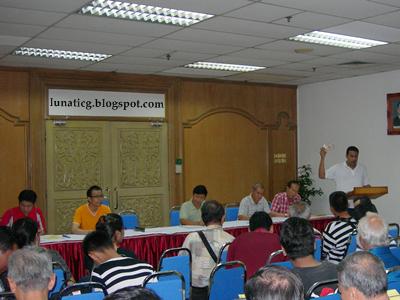
The auction start at 10.25am with MNS president Mr. Thenakaran Nadarajah himself as a auctioneer. Mr. Lawrence De Souza act as a bidder for mail bidders. There are only around 30 members of the society who participated in the bidding process. Most of the items on auction come home without any bidder, although Mr. Thena asked members few times if they want to bid for the items. Most of the item reserve price are below the market price. When the time come for item no.59, many members join the bidding. process(Saran Singh, Dickson Niew etc). Its like a battle for the 1976 1 sen copper. In the end, a bidder won the coin at RM3600. A little bit lower then everyone expected (RM4000).

1 sen copper 1976


Its a fun auction day for all MNS members. Some of my Facebook friends won their auction at reserve price, congratulations to them. If you remember about that two little kids that I had been talking in the last MNS auction no. 143, they're still coming and joining this auction. Hopefully more younger generation will keep on joining coin collecting as a hobbies. The MNS Auction participant has been decreasing each time, some changes has to be done if MNS want their auction to be popular again. You can read my old posts about these matter.

More pictures and videos can be viewed at Malaysia coin Facebook page.

Monday, September 19, 2011

Malaysia Numismatic Celebrity

Do you meet any Malaysia Numismatic Celebrity lately? It has been a bit hot discussion with some online friends when one of them show the picture of Saran Singh that she encounter during her visit to Amcorp Mall. Exactly, have you meet any of our own Malaysia Pakar Numismatic (Malaysia Numismatic expert)? I had meet many of them but only last year I took pictures with them (for personal collection). Most of the sifu (expert) don't want to share their pictures online because they want to keep it low profile.

Pakar Numismatic Malaysia

Do you know that you have a best chance to meet with all the best in Malaysia Numismatic this coming Saturday? Malaysia Numismatic Society will be conducting their MNS Auction no. 149 this Sunday on 25 September 2011 at 9am in Jabatan Muzium Malaysia, Muzium Negara, Jalan Petalawati, 50480 Kuala Lumpur. You may contact Mr. Lawrence at 012-3710951 for more details. Most of the sifu will be coming for that auction. You can also go to Dickson Niew blog and read more about the auction at Niewmismatic Mint Errors. One of the sifu in his field too (Malaysia Mint errors).

Who exactly that we can consider as Malaysia Numismatic Celebrity? For me, I like to meet all the sifu who had wrote a book of their own. So far, I had meet Steven Tan, KN Boon, Tony Lye Fong Nge and many more. I had seen Saran Singh many times before but I never had a chance to chat or take picture with him. Some of my friends also want to meet david@profxxx, a famous Malaysia eBay Powerseller. You can also go to his blog Malaysia Straits Banknote. He also got many knowledge in Malaysia numismatic but he rarely wrote a thing about Malaysia numismatic.

How about you? Who do you consider as Malaysia Numismatic Celebrity? Get a chance to meet some of them at MNS auction. Share your experience with everyone in here.

Wednesday, August 17, 2011

Tensho Oban for auction

Tensho Oban for auction by Heritage Auctions on 9 September 2011. The Tensho Naga Gold Oban - Omodaka variety ND (1573-1591), one of the rarest of all Oban varieties. The Tensho Oban weight was fixed at about 165 grams and was hammered into three different sizes. This example is the 'NAGA' (or long type) and the largest physical size of all the Obans minted. The estimate price for this auction are $300,000 - $350,000.


This is an extremely rare variety of the Tensho Naga Oban due to the different upper stamp of the two stamps on the reverse: the Omodaka stamp. The Mori family was given permission by Toyotomi Hideyoshi (the great uniter of Japan) to make this official Oban and stamp the symbol of the their family on the reverse, which was the Omodaka plant leaf and flower. The large gold coin plate minted in 73% gold and 27% silver. The ink is original and a vibrant black color. There is scuffing on the high points of the obverse with a small amount of ink missing. Repair apparent on both sides at 8 o'clock on the obverse, and at the matching area on the reverse at 4 o'clock, as evidenced by the disturbance of the original texture of the surfaces near the edge. The repair seems to have been done over a hundred years ago and carefully hammered after perhaps being dropped.


Oban were made of hammered gold with a face value of 10 ryo or 10 Koban coins. The word Oban means 'large stamped' in Japanese. The earliest ōban were made in the 1580s, when the feudal lord Toyotomi Hideyoshi (1536/7-98) co-operated with wealthy merchants in the Kansai district of central Japan and monopolized Japan's metal mines. He then began to mint gold coins of fixed quality.


The auction will take place at Long Beach, California or you can bid it online at: The Tensho Naga Gold Oban.


Friday, August 12, 2011

2 Richard II groats for auction

2 Richard II groats for auction at the Chippenham Auction Rooms with a reserve price of £400. The 14th Century coins will be auction on 20 August 2011. The groats were dug up at a house in Sherston near Malmesbury in the 1960s. The seller has owned the groats for years but don't know how much they are worth. The coins has been identified as a Richard II groat by auctioneer Gordon Brockman. The auctioneer expect the price will go up at £1000.


Picture by BBC: Richard groats for auction


"When the client first brought the coins in, I thought they were Richard III groats," he said.


"But I compared the coins to some images online and worked out that they were Richard II.


"They look very similar but there's a difference in the three dots in the centre of the coins and in the way the hair falls on the king ."


Richard II reigned for 22 years from 1377 to 1399 which, according to Mr Brockman, could mean that as few as 800 coins are still in existence.


"Richard II wasn't around for that long and these coins are in remarkably good condition so we've put them in at between £400 and £600," he said.


Source: BBC News.


Richard II Groats Technical Specification:


Photo by ukdfd.co.uk


Description: Richard II groat of London
Mint: London
Issue Date: 1377 - 1399
Weight (grams): 4.4
Diameter (mm): 25
Metal: Silver
Obverse Description: Crowned bust facing within a tressure of arches.
Reverse Description: Long cross pattée dividing legends; three pellets in each angle.


Wikipedia: Groat or Fuppence is the traditional name of an English silver coin worth four English pence, and also a Scottish coin originally worth fourpence, with later issues being valued at eightpence and one shilling.


Saturday, July 16, 2011

The Most Famous Ancient Coin

The Most Famous Ancient Coin in History, The "Ides of March", Silver Denarius minted by Julius Caesar assassin Marcus Brutus will be auctioned by Heritage auction on 9 September 2011. The coin pre-auction estimate is $500,000+ and if it reach that, it will establish a record price for a Roman silver coin. The coin has been in collection of many famous people including Hollywood producer Sy Weintraub and the actor Peter Weller. It was also in the world-famous Nelson Bunker Hunt Collection. Since the early part of the 2000s, the coin has been part of a private Arizona holding.


The dime-sized silver coin depicts the head of Marcus Junius Brutus, one of the ringleaders of the assassination plot, on its obverse. The reverse depicts a dome-shaped liberty cap (traditionally given to freed slaves), flanked by two drawn daggers and the Latin inscription EID MAR “Ides of March”. The dome-shaped liberty cap and two drawn daggers indicates Brutus' intention of freeing Rome from Caesar's imperial ambitions and the murder weapons employed to do so. The coin celebrated an assassination of Julius Caesar on the 15 March 44 BC.

Marcus Junius Brutus were born about 85 BC. Brutus was from a long line of Romans famous for resisting tyranny and defending Republican liberty. He was a close friend and protégé of Julius Caesar, but when Caesar seized power as Dictator in 49 BC, Brutus joined the Republican forces opposed to him. After the defeat of the Republicans the following year, Caesar pardoned Brutus and gave him every preferment. As Caesar became more megalomaniacal, however, Brutus joined the conspiracy against him and is said to have delivered the fatal dagger thrust, prompting Caesar’s final words (spoken in Greek), “You too, my child?”

Brutus had carried out the attack with some fellow Roman Senators in 44 BC when Caesar had come unarmed to address the Senate on 15 March. This day was known to the Romans as the ides, or the middle day of the month and was recognised on a new calendar system that Caesar himself had established just two years before.

After the murder, the conspirators or “freedom party” fled Rome to Macedonia to raise an army. Brutus assembled a pro-Republican power base in Macedonia (Greece) where he could wage war against Caesar’s successors, Mark Antony and Octavian. Looting gold and silver from the local population, he began to strike coins to pay his growing army. Amongst the coins the conspirators briefly struck to this end was this, the 'Ides of March' denarius.

In a final twist of fate, Brutus used the same dagger he had plunged into Caesar to take his own life following his final defeat at the second battle of Philippi on 23 October 42 BC. The Eid Mar denarii became rare because the type was deliberately recalled and melted down by the victors, Mark Antony and Octavian.

Source: Heritage Auction, British Museum.

Friday, July 15, 2011

The most perfect counterfeit banknote

A rare set of fake banknotes by Hitler will be auctioned by Mullock's auctioneers at Ludlow Racecourse, Shropshire on August 18. The fake pound notes printed in "Operation Bernhard" intend to ruin British economy during world war 2. A set of four bank notes (£5, £10, £20 and £50 notes) recovered from Lake Toplitz in Austria will be auctioned next month and are expected to fetch £2,000 at the auction. The forgery by Hitler is the most perfect counterfeit banknote in history.


In 1942, Hitler produced £134million of counterfeit notes in "Operation Bernhard". Nazi spies had been ordered to smuggle the cash into Britain and flood the economy with the fake money. But Hitler's plan was foiled when British spies got wind of the idea and intercepted the shipment of the notes. The Bank of England first learned of a plot from a spy as early as 1939. It first came across the actual notes in 1943, and declared them "the most dangerous ever seen."

The initial plan was to destabilize the British economy by dropping the notes from aircraft, but Hermann Goering's Luftwaffe declared it did not have enough planes to deliver the forgeries, and the assets were put in the hands of SS foreign intelligence. Many were transferred from SS headquarters to a former hotel near Meran in South Tyrol, Northern Italy, from where they were laundered and used to pay for strategic imports and German secret agents operating in the Allied countries.

The Nazis forced Jewish prisoners, experts in engraving and printing, held at the Sachsenhausen Concentration Camp to produce the notes. By the time Sachsenhausen was evacuated in April 1945 the printing press had produced 8,965,080 banknotes with a total value of £134,610,810. At the war's end the mint notes still in Germany were dumped in Lake Toplitz together with the printing plates made to produce them after 'Operation Bernhard' was abandoned with just a handful of notes having made it into British circulation. The notes are considered among the most perfect counterfeits ever produced, being almost impossible to distinguish from the real currency.

In 1959, German magazine, Stern, finance a diving team to retrieved the forged sterling currency Operation Bernhard hidden in boxes, and a printing press. They were taken out of the lake by divers but have amazingly stayed in great condition.


Friday, June 24, 2011

China dragon coin auction record

A gold China dragon coin auction record for £46,000 in a recent Spink auction. The China Kuping Tael, depicts a symbolic Chinese dragon surrounded by clouds on its face, with the value, date and inscription 'Ta Ching Gold Coin' on its reverse. Many people target the coin price can go as far as £97,000 but its only come a little bit over its lower estimate. The gold pattern K’uping Tael coin broke Spink previous record for dragon coin at £36,800.


Detail of the coin from Spink:
China, Empire, Kuang-hsu (1875-1908), gold pattern K’uping Tael, 1906, Tientsin mint, plain edge, dragon surrounded by large clouds within plain circle, no inscription, rev. four characters, ‘Ta Ching Gold Coin’ within beaded circle, date over, value below (F.1; Kann 1540; L&M.1023), in NGC holder graded MS62, extremely rare.


Tuesday, May 17, 2011

China largest coin auctioned

China largest coin auctioned by China Guardian Auctions Co Ltd for $1.18 million (7.70 million yuan) at an auction in Beijing. The Y2K Commemorative Gold Coin with a face value of 3000-yuan, weight at 10 Kilo of .9999 pure gold and minted in 2000; come with original package and certificate no.17. This gold coin is the biggest of its kind first appeared in the world’s modern coinage. Only 20 of this coins are minted. In 2000, this People's Bank of China 2000 Millennium commemorative gold coins, listed in World Guinness record book as the largest and heaviest gold coin.


The large coin was auctioned off by China Guardian Auctions Co Ltd after twenty-two rounds of bidding on Saturday. Minted in 2000, the coin is the heaviest gold coin minted ever since the Chinese government started minting gold and silver coins in 1949, said Guo Xueguang, manager with the philatelic items and coin department in Guardian Auctions. The coin is 99.99 percent gold, with a par value of 30,000 yuan. It combines both traditional and modern markings, making it highly valuable for collectors, he said.

Gold and silver coins have become more popular in recent years for their surging prices and ability to resist inflation. A 5-kilogram commemorative coin issued by China was auctioned for 10.30 million yuan in Japan last April, said Guo.

Source: China Daily


Friday, April 8, 2011

Worlds most expensive gold dinar

A specialist auctioneers, Morton & Eden in London, make it in a record book for Worlds most expensive gold dinar and Dirham. The Umayyad dinar, one of the rarest and most highly-prized of all Islamic gold coins, struck possibly to coincide with an occasion when the Caliph himself led the Hajj pilgrimage to Mecca, sold for a record £3,720,000 in a sale at specialist auctioneers Morton & Eden in London. First Islamic coins struck in the Sultanate of Oman, an extremely rare Umayyad silver dirham, one of only a handful known today dating from the Hijri year 90 (709 AD) sold for £1,080,000.


The Umayyad dinar, dated 105h (723AD) was struck from gold mined at a location owned by the Caliph himself; known on the coins as the “Mine of the Commander of the Faithful”. An additional legend which reads: “bi’l-Hijaz” (“in the Hejaz”), makes it the earliest Islamic coin to mention a location in the Kingdom of Saudi Arabia. It had been expected to realise £300,000-400,000, but four bidders in the saleroom sent the price spiraling ever higher. It was purchased by the British trade on behalf of a European private collector.

A second, slightly earlier dinar (92h - 711AD) struck from gold from the same mines sold for £648,000. It had been estimated at £250,000-300,000.

Morton & Eden Islamic coins specialist Stephen Lloyd said: “We are absolutely thrilled and delighted with the results from this sale. We had worked very hard to promote these particular coins internationally, but the prices they have achieved have surpassed all expectations. Their success also demonstrates that sales by public auction are the only way to achieve the very highest prices for the very finest pieces.

“The excellent results for the two gold dinars early on in the sale, which was dedicated to important coins of the Islamic world, set the stage for the remainder and extremely strong prices were paid throughout.”

Scholars have identified the site of the mine itself as Ma`din Bani Sulaim, located north-west of the Holy City of Mecca. Gold has been mined there for thousands of years, and the site is still worked today. Remarkably, mediaeval Arab writers record that the Caliph bought a piece of land in this area, containing at least one gold mine, almost exactly when these coins were made. But while there is general agreement on the source of the gold, the question of exactly where these coins were struck is harder to answer.

“The capital, Damascus, is a strong possibility, but mint workers and their tools could easily have travelled with the Caliph and struck coins wherever he stayed,” Stephen Lloyd said. “Scholars have noted that the dates of these very rare dinars seem to coincide with the occasions when the Caliph himself led the Hajj pilgrimage to Mecca, while an old inscription also shows that a road built specially for the pilgrimage went right past this mine. So one plausible theory argues that the Caliph visited his gold mines while en route for Mecca, and it is possible these coins might have been struck while he was travelling.”

“This coin reflects the importance of Oman and the Gulf region as a key commercial centre, then as now,” said Stephen Lloyd.

The sale raised a total of £6,673,560, against estimates of £886,000-£1.16 million.

Sunday, November 7, 2010

MNS Auction 146 invitation

This is an announcement to all Malaysia Numismatic Society (MNS) members,you are invited to contribute coins and bank notes in this coming auction. The authentication will be held on 12 November 2010. You may contact Mr. Lawrence at 012-3710951 for more details. MNS Auction No.146 will be held on end of 19 December 2010. The Auction normally will be held at Jabatan Muzium Malaysia, Muzium Negara, Jalan Petalawati, 50480 Kuala Lumpur. There is a small hall in there where this auction normally held by MNS.

Photo: Department of Museum, Malaysia.

Photo: Item viewing session for MNS Auction 143.

There will be Bourse Tables available at RM 50.00 per table.Members interested,please book your tables with payments to Mr Tan Tai Seng (03-79835011) at least one week before the auction.

This auction only for members of MNS only. You can read about their membership in here:Malaysia Numismatic Society membership. Entrance fee for ordinary member is RM20.oo and RM40.00 for annual subscription fee. Their coin auction is for member only. Any numismatist over 12 years but below the age of 18 and resident in Malaysia may apply to be a Junior Member. The Entrance Fee for Junior Members is RM5.00 and Annual Subscription is RM15.00. Kindly download the Application Form and send it to the Society either via post, fax or e-mail for approval.

Related Posts:

Wednesday, September 29, 2010

Nazi fake pound notes for auction

A rare fake £20 pound note printed by nazi will be aution today. The note is expected to fetch £400 when it goes under the hammer at Mullock's auction house in Ludlow, Shropshire. It is blank on one side and the other has Britannia at the top and is dated October 1937 and "promises to pay the bearer." The fake note printed by the Nazis in a scheme to ruin the British economy by flooding the country with fake cash. British intelligence got wind of the scheme in 1939 and countered the counterfeiting so successfully that the Bank of England recorded just one as having been paid out.


"These notes are incredibly rare because most were destroyed and they are quite fragile. The operation was halted by the Germans in 1945 and it is thought that the majority of the notes was dumped in Lake Toplitz in Austria. Collectors are keen to own one of these fakes as they rarely come up for sale." Richard Westwood Brookes, from Mullock's said.

Operation Bernhard was launched before the war and the plan was to print money. The Germans forced Jews in a concentration camp to forge £134 million worth of notes and they had 100 agents ready to put the money into circulation in the UK. This notes which in the 1940s would have had the buying power of £600 today has emerged from a private a collector and is now being sold.

The Nazis began printing the backdated five, 10, 20 and 50 pound notes in 1942 and created nine million of them valuing 134 million pounds. Some continued in circulation after the war and resulted in the Bank of England withdrawing all notes with a value of more than five pounds. And it was not until the 1970s that notes with the denomination of £20 started appearing again. Ironically for the Germans, the possession of this money became a major factor in identifying Nazi agents and led to many successful arrests.

The counterfeiting was carried out at the Sachsenhausen concentration camp in Germany. After it was evacuated of the operation was transferred to Redl-Zipf in Austria, a subsidiary camp of Mauthausen-Gusen concentration camp. At the beginning of May 1945, the team was ordered to be transferred to Ebensee subsidiary camp, where they were to be killed together. However, the prisoners revolted and were saved.

Source: Telegraph.co.uk

Related Posts:

Thursday, September 23, 2010

MNS Auction 145 this Sunday

Anyone will be going to Malaysia Numismatic Society (MNS) Auction no. 145 this Sunday, 26 September 2010? This will be the third auction by the society this year. The Auction normally will be held at Jabatan Muzium Malaysia, Muzium Negara, Jalan Petalawati, 50480 Kuala Lumpur. There is a small hall in there where this auction normally held by MNS. The auction normally start at 10.00am and viewing of the lots will start at 9.30am on the same day. I suggest you come early since there will be a bourse table outside for member and collector to buy and sell as all sorts of accessories, coins and banknotes.


You can look at the MNS Auction 145 list. From what I see, most of the items are Malaysia banknote with replacement and solid number notes as a majority lots. I am not into this kind of banknotes, I am not sure if the reserve price are interesting for all of you. I am more interested in Straits Settlements 10 cents 1919 Ag Treasurer notes but the price is within my budget. Look like Singapore ship series notes are on the main lots for this auction. I knew some collector who like to get a hand on some of it.


This auction only for members of MNS only. You can read about their membership in here: Malaysia Numismatic Society membership. Entrance fee for ordinary member is RM20.oo and RM40.00 for annual subscription fee. Their coin auction is for member only. Any numismatist over 12 years but below the age of 18 and resident in Malaysia may apply to be a Junior Member. The Entrance Fee for Junior Members is RM5.00 and Annual Subscription is RM15.00. Kindly download the Application Form and send it to the Society either via post, fax or e-mail for approval.

Related Posts:

Saturday, August 21, 2010

Antique box with treasure found

A family from Dronfield, Sheffield found an Antique box with treasure in old mahogany box that had been kicking around their house for 30 years. Opening the box with help from a locksmith revealed the drawers filled with 1500 coins, some dating back 2000 years. The collections are auctioned at the online website ELR Auctions so people from all over the world can take part on the auction. The auction house has been established in Sheffield since 1840.

Photo by BBC: One of the Roman coins found.

Auctioneers at ELR in Sheffield were surprised at how much they sold for. Rob Lea from ELR spoke to BBC Radio Sheffield after the auction in August 2010:

"I thought there may be some very good prices and there were. The odd one fell short but the vast majority sold for a lot more than we expected.

"The best price was a collection of Roman and ancient coins which we thought would go for £600-800, but they ended up going at £1700."

The collection included coins which were 2000 years old up to the 20th century. They had belonged to a collector who had passed them down to the people who found the box.

ELR put the auction online so that bidders from all over the world could take part:
"Lots of people bought over the Internet and the room was well attended."

Photo: Rob Lea, an auctioneer from ELR in Sheffield.

The collection was split into 50 lots for the auction:

"Different collectors want different types of coins," explains Rob Lea. "There are Roman collectors, people who want gold, silver, and so on. There were some very good coins among them.

"The sorts of people with an interest are coin collectors, traders who buy to sell them on and people who buy them to melt the gold and silver down.

"None of these fell into that bracket because they were all very interesting coins."

Photo by BBC: Some of the 1500 coins.

Rob Lea says it was an exciting moment when he first looked through the opened box:
"I was like a kid opening his Christmas presents. I wasn't quite sure what I was going to see but each drawer contained some real beauties, some really difficult finds. This doesn't happen all the time and to get the cream of the crop is quite exciting. I'm sure the owners will be very happy at the good news."

You can read more about the auction house at their official auction website-ELR Auctions.

Source: BBC News.

Related Posts:

Wednesday, August 11, 2010

MNS Auction 145 invitation

This is an announcement to all Malaysia Numismatic Society (MNS) members,you are invited to contribute coins and bank notes in this coming auction. The authentication will be held on 21-08-2010. You may contact Mr. Lawrence at 012-3710951 for more details. MNS Auction No.145 will be held on end of September 2010. The Auction normally will be held at Jabatan Muzium Malaysia, Muzium Negara, Jalan Petalawati, 50480 Kuala Lumpur. There is a small hall in there where this auction normally held by MNS.

Photo: Entrance to Jabatan Muzium Malaysia.


Photo: Item viewing session for MNS Auction 143.

This auction only for members of MNS only. You can read about their membership in here: Malaysia Numismatic Society membership. Entrance fee for ordinary member is RM20.oo and RM40.00 for annual subscription fee. Their coin auction is for member only. Any numismatist over 12 years but below the age of 18 and resident in Malaysia may apply to be a Junior Member. The Entrance Fee for Junior Members is RM5.00 and Annual Subscription is RM15.00. Kindly download the Application Form and send it to the Society either via post, fax or e-mail for approval.

Related Posts:

Friday, June 18, 2010

Bank of Vancouver $5 bill auctioned

A century after the ill-fated Bank of Vancouver opened, one of its $5 bills is expected to fetch $50,000 to $100,000 at auction. What makes this $5 bill special is its serial number; 000001. It is literally the first $5 bill issued by the Bank of Vancouver, which operated between 1910 and 1914. It also doesn't seem to have been ever put into circulation, because it is in excellent shape.

"It's not in mint shape but it's in very fine condition," said Charles Moore of Moore Numismatic Auctions, who will be selling it June 24 in Toronto. "It was folded three times, and appears to have been carried in a wallet. But it's in much finer condition than most large size banknotes of that time."

In fact, Moore thinks it's in the best shape of any of the nine Bank of Vancouver notes that are still known to exist; six fives, two 10s and one 20. Three of the nine are in the National Currency Collection in Ottawa, which means there are only six Bank of Vancouver notes in private hands.

Number 000001 is supposed to have been given to one of the bank's directors, although which one is unknown. Moore said this owner died in the 1950s and the note went to a relative who lived in Calgary, who sold it to a Calgary coin dealer.

Moore collected number 1 notes and bought it off the Calgary dealer in the 1980s for $8,000. But he wound up trading it to a B.C. collector.

"I had a client who saw me buy it and said 'You're a coin dealer, you're not allowed to collect,'" Moore recounts with a laugh.

"So I wound up trading him for some other things I wanted for my collection: he had a number of serial number 1 notes. It then went to the Victoria area. He died and his daughter called me for an appraisal on it earlier this year. She had no idea of the value, and I said '$40,000 or $50,000.' She said 'Would you sell it?'"

The Bank of Vancouver was launched on July 30, 1910 in the midst of a real estate and industrial boom. Its founders included some of B.C.'s most prominent capitalists, including the lieutenant-governor, James Paterson, and future Vancouver mayor William Malkin, of Malkin Bowl fame. But the boom went bust, and the bank went out of business on Dec. 14, 1914.

"The boom in Vancouver and Victoria started dying in 1912," explains Ron Greene, B.C.'s premier banknote expert. "The money that had been flowing from German and English sources stopped, and in fact started retreating from B.C., because they knew a war was coming."

The Bank of Vancouver limped along for a couple of years, but fell after the collapse of another local company.

"In October 1914 the Dominion Trust company collapsed after the managing director committed suicide," said Greene. "They were badly hit by the collapse of the real estate speculation. This fellow knew there was no way out, so he committed suicide. At first it was portrayed as an accident, then the trust company didn't reopen. That caused a ripple that really pushed the Bank of Vancouver to the edge."

The Bank of Vancouver issued $5, $10, $20, $50 and $100 bills, in a large format that's 50-per-cent bigger than modern bills. No circulating $50s or $100s are known to still exist, but there are proofs. The rarity of any Bank of Vancouver bills makes them very desirable; a well worn Bank of Vancouver $5 bill came up for sale in 2008, and sold for $28,500.

Moore expects this one to attract spirited bidding from several collectors, both in Canada and the U.S.

"I have received calls from three people in Vancouver, two of them very well known," he said.

"I can't tell you who out of confidentiality, but you would know their names. There's another very prominent Canadian banknote collector who lives in Texas who is flying up for the sale who has spent millions of dollars on banknotes. It should be quite an auction."

Source: Vancouversun.com

Related Posts:

Wednesday, May 5, 2010

Indonesia auction shipwreck treasure

Indonesian Government will auction a 10th century shipwreck treasure today but no potential buyer had paid a deposits so far. The gems, crystal ware, gold and porcelain salvaged from an unidentified wreck off Cirebon, West Java, in 2004 is due to be sold in one lot by the Indonesian government in Jakarta on Wednesday. Interest have come from collectors around Asia but none has paid the 16-million-dollar deposit, or 20 percent of the minimum sale price of 80 million dollars, by Monday's deadline.
Photo by AFP: Asia largest shipwreck treasure so far

"There are 20 interested participants, including some from overseas. Those from abroad come from Singapore, Beijing, Hongkong, Malaysia and Japan," Maritime Affairs Ministry official Sudirman Saad said.

"Most have come from Beijing, although there is also the National Museum of Singapore," Saad said.

"So far none of the interested parties has put down the security deposit but we will still hold the auction tomorrow... If there are no buyers we'll propose a second auction."

Under the rules, the government can sell directly to auction houses or museums after three auctions. The Indonesian government has agreed to split the money with a private salvage company which helped recover the treasure; Cosmix Underwater Research Ltd., and his local partner, Paradigma Putra Sejathera PT. The shipwreck was found 90 miles off Cirebon, in West Java, following a tip-off from local fishermen in 2004 and it took 30 divers and some 22,000 dives to recover the treasure.
Photo by AFP: Belgian treasure hunter Luc Heymans

Belgian treasure-hunter Luc Heymans said the haul was one of the largest found in Asia and was comparable to the most valuable shipwreck ever found anywhere, that of the Atocha, a Spanish vessel which sank off Florida in 1622.

It includes 271,000 pieces such as rubies, pearls, gold jewellery, Fatimid rock-crystal, Iranian glassware and exquisite Chinese imperial porcelain dating back to the end of the first millennium, or around 976 AD.

"At the time there was a lot of trade going on between Arabia and India and coming down to Java and Sumatra," said Heymans, who led the salvage effort and subsequent battles with Indonesian officialdom to bring the treasure to light.

"But we think there must have been an ambassador on board because so many pieces are imperial Chinese porcelain."

Descending for the first time onto the wreck site north of Cirebon, West Java, in 2004, the veteran diver said he couldn't believe what appeared out of the gloom on the sea floor.
"The site was 40 metres (130 feet) by 40 metres and it was just a mountain of porcelain. You couldn't see any wood," he said.
Photo by AFP: Yue Mise pot

The pieces also include the largest known vase from the Liao Dynasty (907-1125) and famous Yue Mise wares from the Five Dynasties (907-960), with the green colouring exclusive to the emperor. Around 11,000 pearls, 4,000 rubies, 400 dark red sapphires and more than 2,200 garnets were also pulled from the depths by Heymans and his team of international divers.

It took 22,000 dives to bring it all up but Heymans said the salvage work, from February 2004 to October 2005, was the easy part. "All the major problems began after we got the stuff on shore," he said.

The police arrested two of the divers even though Heymans' company, Cosmix Underwater Research Ltd., and his local partner, Paradigma Putra Sejathera PT, had painstakingly arranged survey and excavation licences. The divers spent a month behind bars before the mix-up was resolved. There were also run-ins with the Indonesian navy, efforts by rivals to move in on the wreck, a year of litigation and two years of waiting while Indonesia drafted new regulations to govern such work.

Some of Heymans' backers who covered him to the tune of 10 million dollars began to worry that their investment would be lost at the bottom of the Java Strait, he said.

"I feel some relief now because so many people told me I would never be able to get the permits and get the stuff out of the country," he said. He adds, however, that it was one of the most difficult ordeals of his career.

Source: AFP, Reuters.

Related Posts:


Sunday, April 25, 2010

Safe deposit box unclaimed property auction

Do you know what happen after you don't claimed your item from safe deposit box that you rent from bank? In United States, it will be auctioned by The State Treasurer Office. In a news I found via masslive.com, State Treasurer's Office shows off abandoned property up for auction on eBay, beginning yesterday. The items up for auction are all unclaimed property found in safe deposit boxes that has been turned over to the state by various banks. When the rent on a safe deposit box lapses, the banks will open the lock and seek to return the item to the rightful owner. If the owner cannot be found, the property is turned over to the state treasurer’s office, which takes over the search.
Photo by Republican staff Michael S. Gordon: Beatles watch.

Some of the items that will be auctioned, what looked like a beat-up quarter with a hole in it, but was actually a George Washington funeral medal issued by the Boston Masonic Lodge upon the first president’s death in 1799. A Silver Beatles watch, a gold version sold for $230,000, this version is silver but still such a historical and rare item. Under the watchful eyes of two state troopers, members of the public could look over the several cases of rare coins and paper money, jewelry, watches, and assorted knickknacks that will be put up for auction. One case on display Thursday contained about $250,000 in gold and diamonds, and officials were hoping it would being in twice that at auction.
Photo by Republican staff Michael S. Gordon: Unclaimed paper money.

James F. Roy and officials with the abandoned property division had several cases on display in the lobby of the Western Massachusetts State Office Building, 436 State St, as part of a one day stopover. From Saturday through July 1, the state hopes to auction off 2,500 lots of abandoned property, ranging in value from a few cents to as much as $70,000. Roy would like to bid on the medal, but can’t. As tangible property manager for the state treasurer’s office, Roy is not permitted to bid on anything in the auction.

What about Malaysia, are abandon safe deposit box items in Malaysia will also be auctioned? Do anyone know about this? This kind of auctioned will certainly something that I will not missed. But selling them on eBay will bring up some competitor for the bid.

Source: masslive.com

Related Posts:

Sunday, April 18, 2010

£1 Falmouth banknote sold for £500

A news by BBC reported a rare piece of Falmouth Banknote produced in 1808 fetched £500 in a specialist auction on Wednesday 14th April. Falmouth is a town, civil parish and port on the River Fal on the south coast of Cornwall, United Kingdom. The name Falmouth comes from the river Fal but the origin of the river's name is unknown. In recent years these types of notes have risen in popularity and value because of their many varieties, one sold in 2004 for £540.

The bank that produced the black and white piece of currency folded just two years after its production, enhancing its rarity. It was highly sought after according to auctioneers Spink, because it was never issued and has remained in "very fine" condition. Although it was only expected to sell for between £350 and £450, two bidders at Spink in London, one in person and one via phone fought hard to obtain the piece of Cornish financial history.

Reflecting on the notes origin, auctioneer Barnaby Faul said: "All towns and cities in England used to issue their own banknotes.

"Privately-owned merchants would start up their own banks, but their notes, which were like IOUs, could only be used locally. When these local banks, like Falmouth, went bust, their notes became completely worthless."

Source: BBC News, Wikipedia.

Related Posts:

Wednesday, April 7, 2010

MNS auction no. 143

This is the last post from three of Malaysia Numismatic Society (MNS) auction no.143. The auction held on 28 March 2010 at Jabatan Muzium Malaysia, Malaysia National Museum, Kuala Lumpur. The auction start at 10.45am with MNS president Mr. Thenakaran Nadarajah himself as a auctioneer. Mr. Lawrence De Souza (guy sitting with the bidders card) act as a bidder for mail bidders. There are only around 45 members of the society who participated in the bidding process.


This year, the crowd are very small compare with the last auction held by this society in 2005. Only around 70 people are watching the auction session. Most of them are almost the same age with me or a bit older. I can only see two kids brought by their parents in this auction. look like, kids nowadays really doesn't interested on coins or banknotes collecting. Most of them were really interested on video games and social network like facebook. I start my collecting at the age of 15. With all the travelling and hunting around Malaysia, it is a rare sight, looking that kids participating in this kind of hobbies. One day, we can only see this kind of stuff in the museum.

Back to the auction, I cannot stay for the full auction that day. I am also cannot take the full video of the auction. I am sorry, will try to do better next time. This is the first time I am doing a post about any auction. Look like my digital camera is a bit slow. Look like the Malaysia 10th Series RM1 CR 7204131 Ali Abul Hassan signature with a reserve price of RM1650 ended up with no single bid, there is one seller at the bourse table selling the same CR prefix banknotes at RM1150 that day. That mean, to anyone who still looking for UNC CR Ali Abul signature, you still can get it for RM1000 this year.

The Malaya $10 1941 D/60 019898 extremely fine condition and with nice number too, end up at RM850. That is consider a way cheaper then the market price. Only two bidder, make a bid on that item. Malaysia 1st Series RM100 A/1 323396 Ismail Ali’s signature end up at RM4000. The United States Replacement $1 B 00098644 notes, end price is RM50. If any of you, MNS members have the complete auction list sale price, it will be a little bit of help to send the link in here or e-mail it to me at lunaticg@gmail.com.

One suggestion to MNS committee members, it is better nowadays if live online auction been done, instead of offline sale like this. It will be a bit hard to start with the website but in the end, it will benefit the society more. Most collector are not in Kuala Lumpur. It will added transportation cost for members from Penang, Kedah, Sabah or even Sarawak come to Kuala Lumpur, simply for the auction. More people bidding, means a good and healthy auction for the society. Many people also email me asking if any website is holding auction for coins and banknotes in Malaysia. This society can help member sale their items with accurate grading and reasonable reserve price. This is also one way to promote the society to the public and make people interested on joining the society. No pun intended but right now, what I see is that this society trying to hide their activity to the public (or maybe there is no activity at all). This society exist since 1968, why not make a change? For the benefit of the society and Malaysia Numismatic.

Please correct me if any of the information in here is wrong.

Related Posts:
 

blogger templates | Blogger